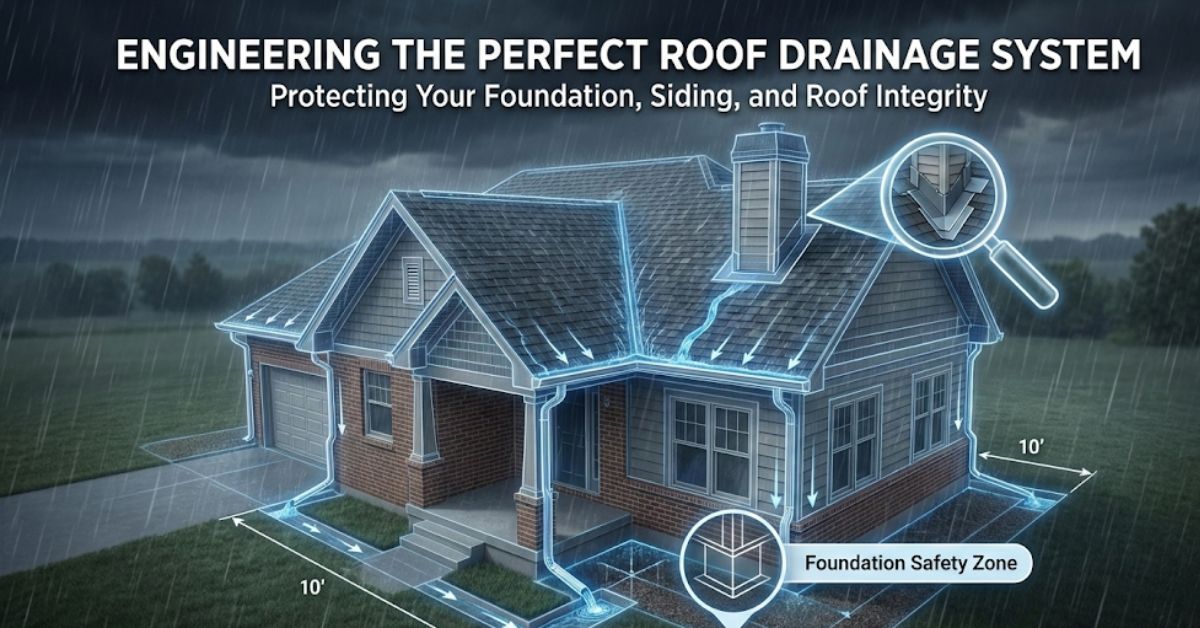
A roof’s primary function is efficient water removal, but it must often balance this with aesthetic appeal and on-deck workspace. A poorly designed system allows water to pool at the base of your home, leading to basement flooding, soil erosion, and structural compromise. Designing effective roof drainage systems ensures your property stays dry year-round by using the right components and engineering principles.
Expert Note: Always consult local plumbing codes before starting any roof drainage project to ensure compliance and safety.
Critical Design Considerations
Every property is unique, and several variables must be analyzed to create a high-performance system:
-
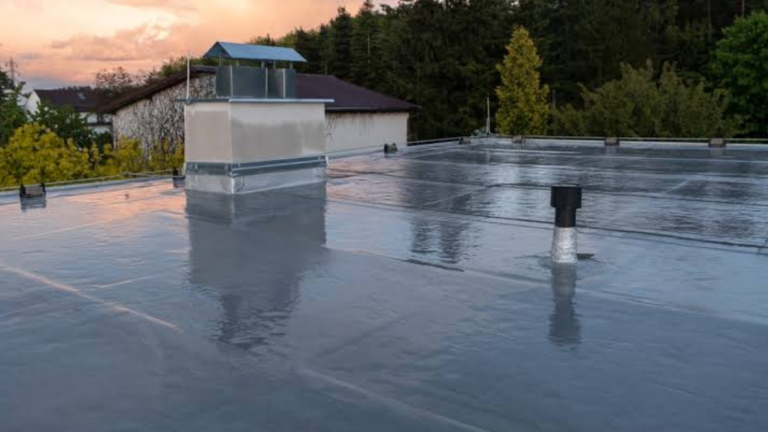
Structural Design & Roof Load: Roofs often serve as temporary rainwater reservoirs. For example, a flat roof with a $30 \text{ lb/sq ft}$ load typically limits water depth to $3 \text{ inches}$.
-
Roof Slope: Steeper pitches shed water faster, reducing build-up and weight load. Pitch degree determines if you need more drains in specific low spots.
-
Maximum Pipe Flow Rates: Engineers use the set maximum flow rate of pipes to properly size leaders and storm sewers.
-
Roof Deflection: Stress can cause a roof to bow, creating low spots that trap water. Consult an architect to determine how deflection affects your drainage flow.
-
Wind Factors: Building layout and wind swirls can restrict water from following its intended flow patterns.
Technical Factors Influencing Drainage Design
Effective drainage is not a “one size fits all” solution. When our team designs a system, several technical variables are analyzed:
-
Roof Pitch and Slope: Steeper roofs shed water at a higher velocity, requiring larger gutters and more frequent downspout placement to catch water before it overshoots the trough.
-
Roof Surface Area: The total square footage of your roof determines the “catchment area.” A larger footprint collects more gallons of water per minute, necessitating a more robust drainage infrastructure.
-
Peak Rainfall Intensity: In Missouri and Illinois, systems must be designed for worst-case scenarios, ensuring the system can handle heavy recorded downpours without backing up.
Why Design Matters: Protecting Your Property
An improperly designed or neglected system does more than just leak—it actively degrades your home’s value. Without a strategic path for water, you risk:
-
Foundation Failure: Concentrated water saturates the soil, causing it to expand and contract, which eventually leads to foundation cracks.
-
Siding Rot: Overflowing water can seep behind residential siding, causing hidden rot and mold growth in wall cavities.
-
Ice Damming: In winter, poor drainage allows water to pool and freeze at the roof’s edge, forcing snowmelt under your shingles.
Local Expertise Across Missouri and Illinois
Prrotect Roofing provides expert drainage design and residential roofing services across the following local communities:
Missouri Service Areas
We are proud to serve as your local roofing company in Missouri, including St. Louis, St. Charles, Ballwin, Chesterfield, Wentzville, O’Fallon, Kirkwood, and Fenton.
Illinois Service Areas
Our team also provides high-quality roofing in Illinois, serving Belleville, Edwardsville, Alton, Fairview Heights, and O’Fallon, IL.
Maintenance: The Final Piece of the Puzzle
Even the most expertly designed system will fail if it is obstructed by debris. Regular gutter cleaning and maintenance are essential to keep your “water highway” clear. We recommend professional inspections twice a year to ensure your system is aligned correctly and flowing freely.