Hail hits your roof. Wind tears off shingles. A tree crashes down during storms. Now you need repairs costing thousands—and you need your insurance to pay.
Filing a roof damage insurance claim properly makes the difference between getting full coverage and paying out of pocket. Understanding what’s covered, how to document damage, and when to file determines your success.
At Prrotect Roofing, we help Missouri and Illinois homeowners file successful roof damage insurance claim cases. We know what insurance companies look for, how to document properly, and how to maximize payouts.
Let’s explain exactly how roof damage insurance claim works and what you need to do.
What Roof Damage Is Covered?
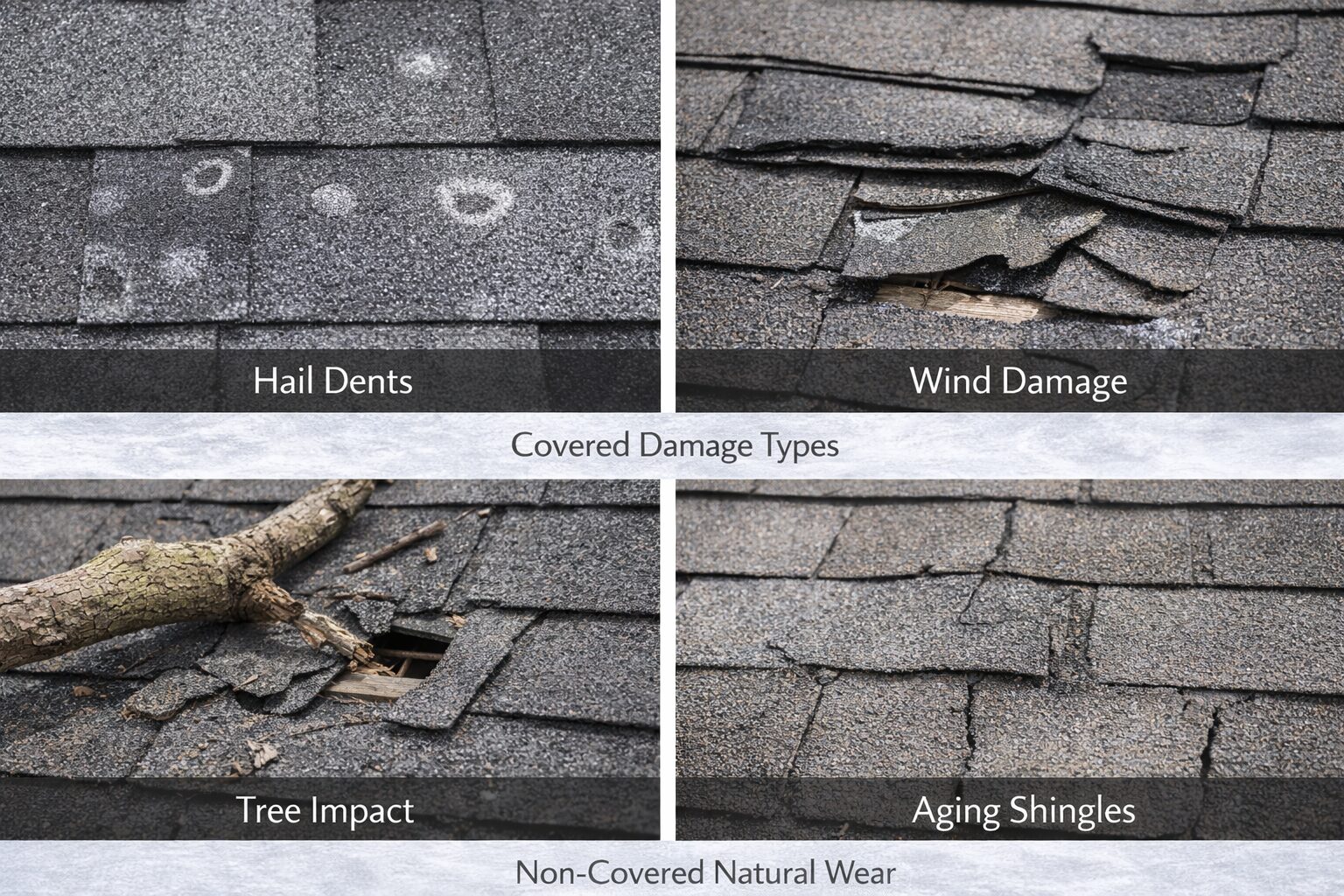
Insurance covers sudden, accidental damage—not gradual deterioration. Understanding this distinction prevents denied claims.
Covered Damage:
- Wind damage (missing/torn shingles)
- Hail damage (dents, cracks, impacts)
- Falling trees or branches
- Fire and lightning
- Flying debris during storms
Not Covered:
- Age-related wear
- Poor maintenance
- Gradual leaks
- Pre-existing conditions
- Normal deterioration
The key factor: Was damage sudden or gradual? Sudden storm damage gets covered. Years of neglect doesn’t.
Types of Roof Damage Insurance Pays For
Different damage types require different documentation and have different coverage standards.
Hail Damage
Hail creates dents in shingles, granule loss, and cracks. Small hail (under 1 inch) may cause damage not visible from ground level.
Look for dents on soft metals—vents, gutters, downspouts, AC units. If these show hail marks, your roof likely has damage too.
Wind Damage
Wind lifts, creases, or completely removes shingles. Missing shingles are obvious. Creased shingles (bent but not missing) also indicate wind damage.
Check for shingles on ground, in gutters, or scattered around your property after storms.
Tree Damage
Fallen trees, branches, or limbs create obvious damage—holes, crushed sections, broken rafters. This almost always gets covered if documented promptly.
Even branches scraping roofs during wind can remove protective granules, creating claim-worthy damage.
Water Damage From Storms
If storms cause roof leaks leading to interior water damage, both roof repairs and interior restoration typically get covered.
Document interior damage—ceiling stains, wet insulation, damaged drywall. This strengthens your roof damage insurance claim significantly.
How To Document Roof Damage Properly
Documentation quality determines claim success. Poor documentation leads to denials or underpayment.
Immediate Steps After Damage:
Take photos from multiple angles showing entire roof and close-ups of specific damage. Include date stamps on all photos.
Photograph interior damage if leaks occurred. Water stains, wet spots, and damaged ceilings prove storm impact.
Document the storm itself. Weather reports, radar images, and local news coverage establish that damaging weather occurred.
Professional Inspection:
Hire licensed contractors to inspect and document damage. They identify issues you might miss.
Get written assessments detailing all damage. Professional reports carry weight with insurance adjusters.
What To Photograph:
Missing or damaged shingles Dents on vents, flashings, gutters Granule loss in gutters or on ground Interior water damage Debris on or around roof Storm damage to surrounding property
More documentation is always better. Insurance companies can’t deny what’s clearly documented.
The Roof Damage Insurance Claim Process
Understanding each step helps you navigate the process successfully.
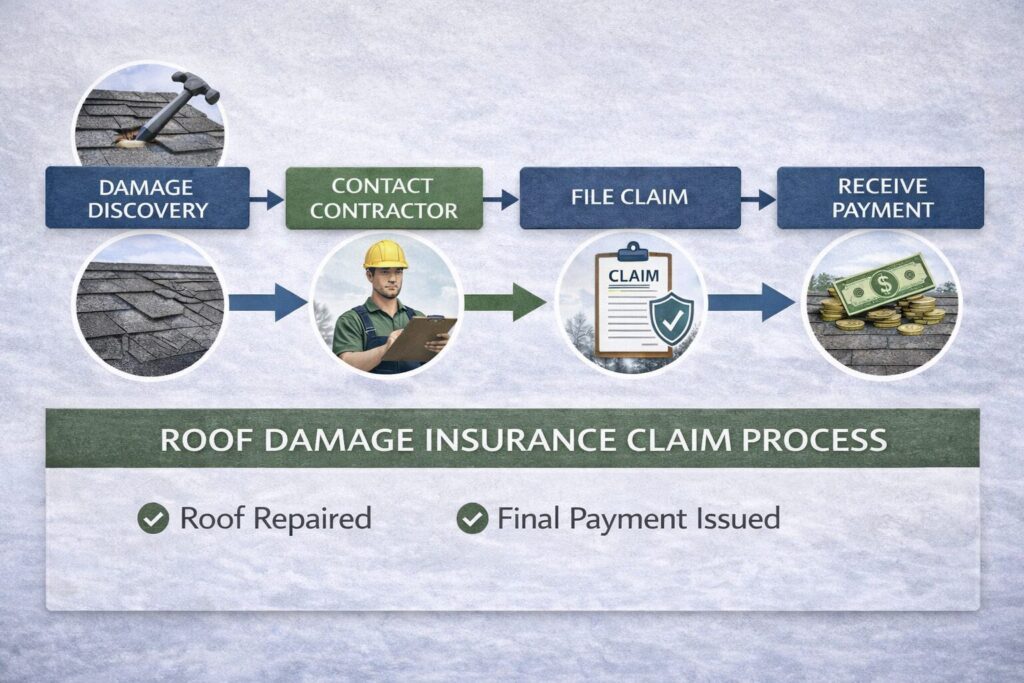
Step 1: Report Damage Quickly
Call your insurance company within days of discovering damage. Most policies require notification within one year, but prompt reporting improves approval odds.
Provide basic information—policy number, date of damage, brief description. Get your claim number for future reference.
Step 2: Schedule Professional Inspection
Hire a reputable contractor to assess damage and provide estimates. They understand what insurance companies require.
Don’t make permanent repairs yet. Insurance needs to verify damage before authorizing work.
Step 3: Meet With Insurance Adjuster
Your insurance company sends an adjuster to inspect and determine coverage. Be present during this inspection.
Have your contractor present if possible. They can explain damage extent and point out issues adjusters might miss.
Provide all your documentation—photos, reports, receipts for emergency repairs.
Step 4: Review Settlement Offer
Insurance provides an estimate of covered damage and payout amount minus deductible.
Compare adjuster’s assessment with contractor’s estimate. Significant differences may require negotiation or supplemental claims.
Step 5: Complete Repairs
For Replacement Cost Value (RCV) policies, insurance issues partial payment initially. You receive remaining funds (recoverable depreciation) after repairs are completed and documented.
Submit final invoices and completion documentation to receive full payment.
For professional roof damage insurance claim assistance in Missouri and Illinois, Prrotect Roofing provides residential roof replacement with full claim support.
Replacement Cost vs. Actual Cash Value
Understanding your coverage type affects your payout dramatically.
Replacement Cost Value (RCV)
Pays full cost to replace damaged roof with new materials. If replacement costs $15,000 and your deductible is $1,000, insurance pays $14,000.
RCV provides best protection but costs more in premiums. Most policies require RCV for newer roofs.
Actual Cash Value (ACV)
Pays depreciated value based on roof age. A 15-year-old roof lost significant value. Insurance might pay only $7,000 for a $15,000 replacement.
You pay the difference between depreciated value and actual replacement cost—often thousands.
Check Your Policy:
Review your declarations page. It clearly states coverage type.
Many policies switch from RCV to ACV when roofs reach certain ages (typically 10-15 years). This happens at renewal without homeowners noticing.
Common Roof Damage Insurance Claim Mistakes
Avoiding these errors increases approval chances.
Mistake 1: Waiting Too Long
Prompt reporting prevents questions about whether damage occurred during the claimed storm. Delays invite scrutiny.
Solution: File within days of discovering damage.
Mistake 2: Poor Documentation
Vague descriptions and few photos lead to denials. Insurance needs clear evidence of sudden, storm-related damage.
Solution: Photograph everything from multiple angles. Get professional assessments.
Mistake 3: Not Reading Your Policy
Homeowners don’t understand their coverage, deductibles, or limitations until filing claims—then discover unpleasant surprises.
Solution: Review your policy now. Know your coverage type, deductibles, and any roof-specific restrictions.
Mistake 4: Making Permanent Repairs Before Approval
Completing repairs before adjuster inspection can void your roof damage insurance claim. Insurance must verify damage first.
Solution: Only make emergency temporary repairs to prevent further damage. Save receipts.
Mistake 5: Signing Contractor Agreements Before Approval
Storm chasers pressure homeowners to sign contracts before claims are approved. This locks you in regardless of claim outcome.
Solution: Never sign until your roof damage insurance claim is approved.
Mistake 6: Accepting Lowball Offers
Initial estimates sometimes undervalue damage or use incorrect pricing.
Solution: Compare adjuster estimates with independent contractor assessments. Challenge inadequate offers with documentation.
Why Roof Damage Insurance Claims Get Denied
Understanding denial reasons helps you avoid them.
Maintenance Issues
Insurance denies claims for damage caused by poor maintenance or neglect. Missing shingles that weren’t replaced, ignored leaks, or deferred repairs don’t get covered.
Solution: Maintain your roof properly. Document maintenance history.
Age and Wear
Old roofs reaching end of lifespan may not qualify for coverage, especially with ACV policies. Insurance argues the roof needed replacement anyway.
Solution: Know your roof’s age and policy limitations before filing.
Missing Deadlines
Most policies require claims within one year of damage. Some require notification within 30 days of discovery.
Solution: File promptly. Check your policy’s specific deadlines.
Insufficient Documentation
Claims without photos, professional assessments, or clear evidence of sudden damage often get denied.
Solution: Document thoroughly from the start.
Pre-Existing Damage
If adjusters find old damage alongside new damage, they may deny the claim arguing damage wasn’t storm-related.
Solution: Address minor damage promptly. Don’t let issues accumulate.
According to the National Roofing Contractors Association, homeowners working with experienced contractors during the claims process receive 30-40% higher settlements than those filing independently.
Maximizing Your Roof Damage Insurance Claim
Getting full coverage requires strategy.
Hire Experienced Contractors
Contractors who regularly handle insurance work understand documentation requirements and what adjusters look for.
They identify hidden damage—flashing issues, underlayment problems, structural concerns—that adjusters might miss.
Document Comprehensively
More is always better. Photos, videos, measurements, professional reports all strengthen claims.
Include neighboring property damage. If surrounding homes have storm damage, it proves your area experienced severe weather.
Understand Scope
Storm damage often extends beyond obvious shingle issues. Check gutters, downspouts, vents, flashings, siding, and windows.
Interior damage from leaks significantly increases claim value. Document ceiling stains, wet insulation, and structural damage.
Challenge Inadequate Estimates
If adjuster estimates seem low, provide contractor estimates showing actual costs.
Request line-item explanations for discrepancies. Supplemental claims address damage identified after initial inspection.
Consider Public Adjusters
Public adjusters negotiate with insurance companies on your behalf for a percentage (typically 5-15%) of the settlement.
They work for you—not the insurance company—and typically increase settlement amounts significantly.
FAQs About Roof Damage Insurance Claim
How long do I have to file roof damage insurance claim?
Most policies allow one year from damage occurrence. However, prompt filing (within days or weeks) improves approval chances. Some policies have shorter deadlines—check your specific terms.
Will filing roof damage insurance claim raise rates?
Rates may increase at renewal after claims. However, storm damage claims when many homes file simultaneously typically don’t trigger individual rate increases. Discuss impacts with your agent.
What if insurance denies my roof damage insurance claim?
Request written denial with specific reasons. Appeal through your insurance company’s process. Hire public adjusters or attorneys if necessary. State insurance departments handle disputes.
Do I pay my deductible for roof damage insurance claim?
Yes. Deductibles apply to all covered claims. You pay your deductible; insurance pays remaining covered amounts. Never work with contractors offering to “waive” deductibles—this is fraud.
Can insurance force me to use their contractors?
No. You choose your contractor. Insurance must pay reasonable costs regardless of who does the work. “Preferred contractor” programs offer streamlined processes but aren’t mandatory.
Get Expert Roof Damage Insurance Claim Help
Successfully filing roof damage insurance claim requires proper documentation, timing, and negotiation. Professional contractors experienced in insurance work simplify the process.
At Prrotect Roofing, we help Missouri and Illinois homeowners document damage, meet with adjusters, and ensure fair settlements.
We provide free inspections, detailed assessments, and complete claim support.
Call today: (314) 292-9331 for expert assistance.
Serving the St. Louis metro area with honest expertise. Don’t navigate complex claims alone—get professional help ensuring proper coverage.
Your home deserves proper repairs. We’ll help you get them covered.