
Storm damage happens fast. One minute the sun is shining, and the next, wind is tearing off shingles or hail is bruising your roof deck. Suddenly, you are facing thousands of dollars in repairs.
That is when roof insurance claims matter.
Your homeowners insurance policy is designed to protect you from “sudden and accidental” perils. However, the process is often confusing. Many homeowners leave money on the table because they don’t understand how to document property damage or negotiate with insurance adjusters.
At Prrotect Roofing, we help homeowners in Missouri and Illinois navigate this maze every day. From documenting hail hits to meeting adjusters on the roof, we ensure you get the payout you deserve.
What Is a Roof Insurance Claim?
A roof insurance claim is a formal request to your insurance provider to cover the cost of repairs or replacement due to a covered peril.
The Golden Rule: Insurance covers damage that is sudden. It does not cover maintenance.
✅ What Is Covered (The Perils):
- Hail Damage: Dents, fractures, or “bruising” that compromises the shingle’s asphalt layer.
- Wind Damage: Shingles that are creased, torn, or completely blown off.
- Falling Objects: Tree limbs impacting the structure.
- Fire & Lightning: Direct thermal or structural damage.
❌ What Is Not Covered:
- Wear & Tear: Natural deterioration of an aging roof.
- Cosmetic Issues: Minor granule loss that doesn’t affect water-shedding capability.
- Neglect: Leaks caused by clogged gutters or moss growth.
How to File a Roof Claim with State Farm (Step-by-Step)
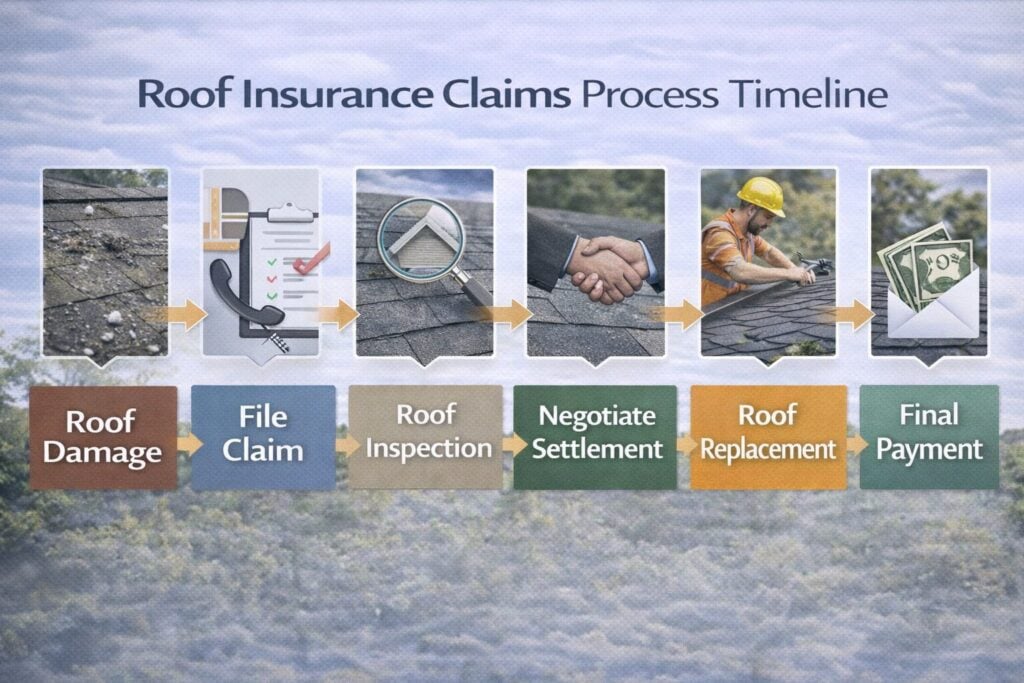
Since State Farm is the largest home insurer in the U.S., many of our clients ask specifically about their process. While every carrier is similar, here is the specific workflow for State Farm policyholders:
- Verify the Damage First: Before calling, have a professional roofer (like Prrotect Roofing) inspect the roof. Filing a claim without damage counts as a “zero-pay claim” on your record.
- File the Claim:
- Online/App: The fastest method is the State Farm mobile app or StateFarm.com.
- Phone: Call 800-SF-CLAIM (800-732-5246) or contact your local agent directly.
- Get Your Claim Number: Write this down immediately. You will need it for every document.
- The Adjuster Assignment: State Farm will assign a Claims Adjuster to your case. They will contact you within 24–48 hours to schedule an inspection.
- The Inspection: The adjuster will walk the roof to verify “accidental direct physical loss.” Crucial: Have your contractor present to walk the roof with the State Farm adjuster. This ensures they agree on the “Scope of Loss” immediately.
- The Payment: If approved, State Farm typically issues an initial check for the Actual Cash Value (ACV) minus your deductible. The remaining Replacement Cost is paid only after repairs are completed.
The Critical Difference: RCV vs ACV coverage
Check your policy “Declarations Page.” This single term determines how much cash you receive.
1. Replacement Cost Value (RCV)
The Gold Standard. Insurance pays the full cost to replace your roof with new materials, minus your deductible.
- Example: New Roof Cost: $15,000. Deductible: $1,000. Insurance Pays: $14,000.
2. Actual Cash Value (ACV)
The Depreciated Value. Insurance pays only what your old roof is worth today.
- Example: New Roof Cost: $15,000. Roof Age: 15 Years (50% depreciated). Insurance Pays: $6,500. You pay the rest.
7 Steps to a Successful Claim
Follow this sequence to maximize your chances of approval.
- Document Immediately: Take photos of the roof and any interior leaks before cleaning up. Note the date/time of the storm.
- Mitigate Damage: You have a contractual “duty to mitigate.” If the roof is leaking, tarp it immediately. Insurance covers the tarp cost, but they may deny interior damage if you ignore it.
- Get a Professional Opinion: Have a contractor verify the damage matches insurance criteria (e.g., 8+ hail hits within a 10×10 square).
- File the Claim: Submit the claim to your carrier.
- The Adjuster Meeting: Ensure your contractor attends this meeting. It is much harder to argue for coverage after the adjuster has left.
- Review the Scope of Loss: Compare the insurance estimate with your contractor’s estimate. If the insurance offer is too low, your contractor can file a supplement to cover the difference.
- Repair & Recover: Once work is done, submit the “Certificate of Completion” to release your final depreciation check.
FAQs
We answer these common questions to help you avoid pitfalls.
Is it worth claiming roof damage on insurance?
Yes, but only if the repair cost significantly exceeds your deductible.
If your deductible is $2,000 and the repair costs $2,500, filing a claim is rarely worth the risk of higher premiums. However, if you need a full replacement ($15,000+), filing a claim is exactly what your premiums pay for. Always get a free estimate from a roofer before calling your agent.
What documentation do I need for a roof damage claim?
You need photos, a timeline, and professional estimates.
To build a bulletproof claim, gather:
- Photos/Video: Clear shots of missing shingles, hail dents, and any interior water stains.
- Date of Loss: The exact date and approximate time the storm hit.
- Repair Estimates: A detailed scope of work from a licensed contractor.
- Mitigation Receipts: Proof you purchased tarps or plywood to stop active leaks.
What not to say to a roof insurance adjuster?
Do not guess the cause of damage or admit the roof is “old.”
Adjusters are trained to find reasons to deny coverage.
- Don’t say: “My roof is old and leaks.” (This implies wear and tear, which is not covered).
- Do say: “The leak started immediately after the storm on [Date].”
- Don’t say: “I think the damage is minor.” (Let the experts inspect it first).
- Don’t say: “I’ll fix it myself.” (This signals you might accept a lower settlement).
How old may a roof be before insurance claims it’s too old?
There is no specific age limit for coverage, but age affects the payout.
Most insurers will cover a roof of any age if it is damaged by a storm. However, once a roof exceeds 15 or 20 years, many policies switch from Replacement Cost (RCV) to Actual Cash Value (ACV). This means they will deduct substantial depreciation from your check.
Will homeowners insurance pay for a new roof?
Yes, if the roof was destroyed by a covered peril like wind or hail.
If a storm damages a significant portion of your roof (often 30% or more), the insurance company is typically required to replace the entire slope or the whole roof to ensure mechanical integrity. They will not pay for a new roof simply because the old one is worn out.
How long do I have to make a roof claim?
Most policies give you 1 year from the date of the storm.
While some states and carriers allow up to 2 years, waiting makes it harder to prove the storm caused the damage. The “best practice” is to file within 30 to 60 days of the event while the evidence is fresh.
Can insurance help pay for a new roof?
Yes, paying for a new roof after a disaster is the primary purpose of property insurance.
If a covered event (fire, tornado, hail) damages your roof beyond repair, your policy is a contract that guarantees funds to restore your home to its pre-loss condition, minus your deductible.
Get Expert Help With Your Claim
Filing a claim is complicated. Don’t do it alone.
At Prrotect Roofing, we specialize in insurance claim assistance. We speak the adjuster’s language, document the damage effectively, and ensure you get every penny needed to restore your home.
Call us today at (314) 292-9331 for a free damage assessment.
We’ll tell you the truth about your roof before you call your insurance company.