
Finding roof damage after a storm is stressful. With replacement costs ranging from $10,000 to $30,000. Your homeowners insurance is supposed to be your safety net.
But the process is confusing, and one wrong move like signing a contract too early or misunderstanding your coverage can cost you thousands.
At Prrotect Roofing, we help Missouri and Illinois homeowners navigate the residential roof replacement process every day. We know the secrets insurance companies don’t tell you and the scams bad roofers try to pull.
Here is everything you need to know to get your claim approved and your home protected.
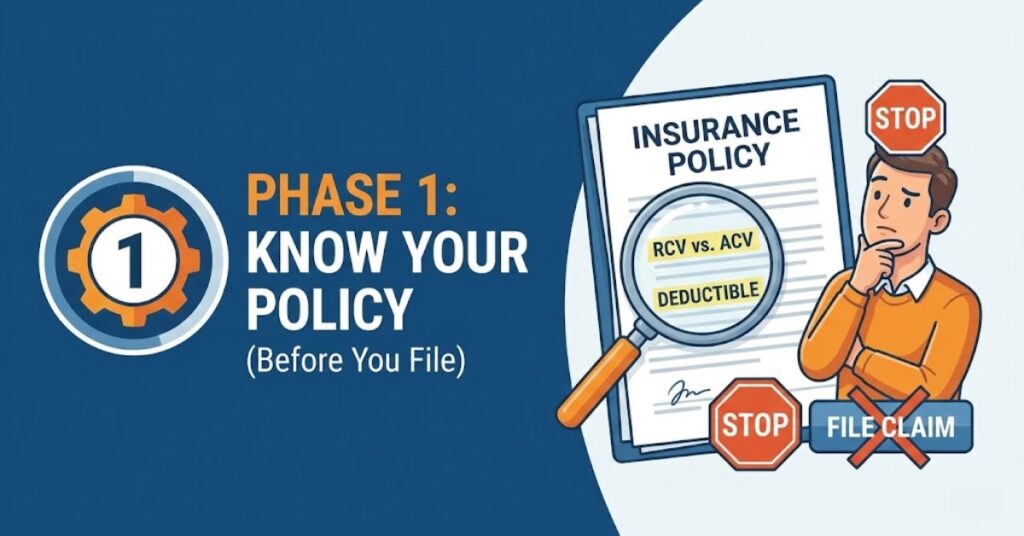
Phase 1: Know Your Policy (Before You File)
Most homeowners don’t read their policy until it’s too late. Understanding these terms is critical to knowing if you will get a full roof replacement or just a fraction of the cost.
1. RCV vs. ACV: The “New vs. Used” Difference
- Replacement Cost Value (RCV): This is the gold standard. It pays to replace your roof with brand-new materials, minus your deductible.
- Actual Cash Value (ACV): This pays only what your old roof is worth today (depreciated value). If your roof is 15 years old, it may have depreciated by 50% or more, meaning you must pay that difference out of pocket.
- Warning: Contractors who offer to work for ACV prices often use cheap materials or cut corners.
2. The Deductible “Trap”
You must pay your deductible. It is often a set amount (e.g., $1,000) or a percentage of your home’s value (e.g., 1%).
- Red Flag: If a roofer offers to “pay,” “waive,” or “absorb” your deductible, do not hire them. This is insurance fraud. Legitimate contractors will never ask you to commit a crime to get a roof.

Phase 2: The 8-Step Claim Process
Don’t rely on the insurance company to lead the way. Follow these steps to stay in control.
Step 1: Get a Professional Inspection First
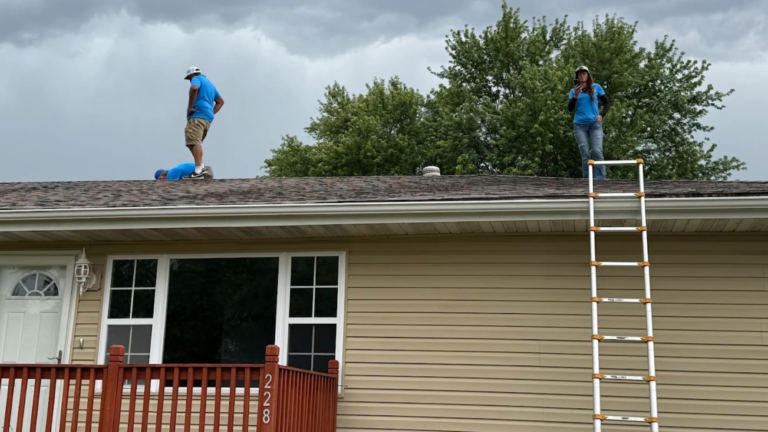
Never file a claim blind. Call a trusted contractor like Prrotect Roofing for a free roof inspection first.
- If the damage is less than your deductible, filing a claim pays you nothing but still marks your insurance history (CLUE report).
- We use specialized software to verify storm dates and document damage before the adjuster arrives.
Step 2: File the Claim & Sign the AOC
Once damage is confirmed, call your insurer. You may need to sign an Assignment of Claim (AOC) form, which allows your contractor to speak directly with the insurance company on your behalf, streamlining the technical discussions.
Step 3: The Adjuster Meeting (Crucial!)
Your contractor should be present when the insurance adjuster inspects the roof.
- Why? Adjusters are human and can miss damage. Your roofer acts as your advocate, pointing out hail hits or wind lift that justifies a full replacement.
Step 4: Review the Estimate (The “First Check”)
If approved, you’ll receive an initial check. This is usually the Actual Cash Value (ACV) payment.
- Note: If you have a mortgage, the check may be made out to them as well. You will need to send it to your lender for endorsement before work can begin.
Step 5: The “Supplement” Process
Secret Insight: Insurance estimates are rarely perfect. They often miss line items like local permit fees, dumpster costs, or manufacturer-required components.
- A good contractor will file a supplement—a request for additional funds to cover these missing items—ensuring you don’t pay them out of pocket.
Step 6: Installation
You pay your deposit (usually the first insurance check), pick your shingle colors, and the work begins.
Step 7: Final Documentation
Once the roof is on, your contractor submits a “Certificate of Completion” to the insurance company.
Step 8: Recoverable Depreciation (The “Second Check”)
If you have an RCV policy, the insurance company releases the final payment (the depreciation money) after they receive proof the work is done. You use this to pay the final balance to your roofer.
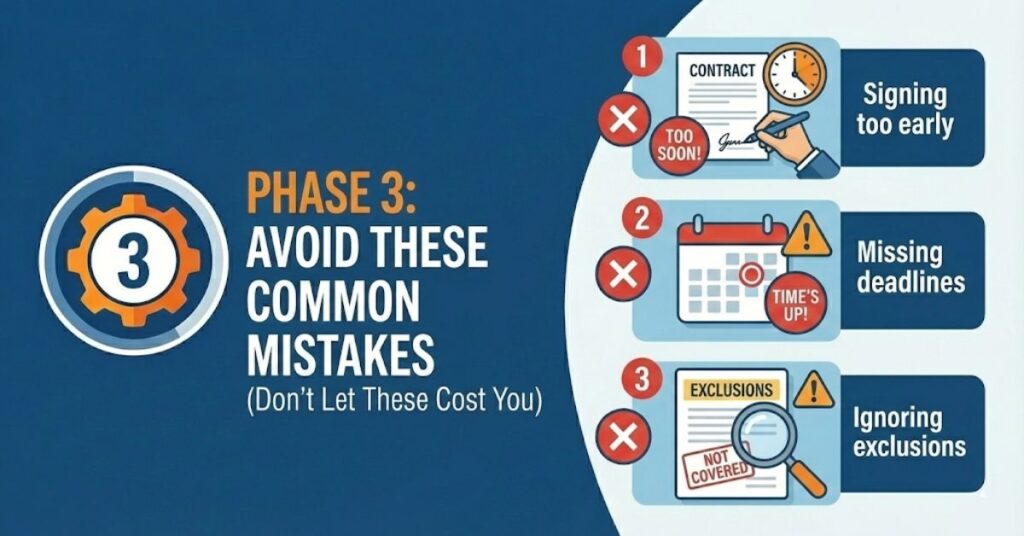
Phase 3: Avoid These Common Mistakes
1. Signing Papers Too Early
Some “storm chaser” roofers will knock on your door and pressure you to sign a contract before your claim is even approved. Never do this. You should only sign a contract once you know the work is covered.
2. Missing the “Statute of Limitations”
You don’t have forever to file. Most policies have a limit—often 1 year from the storm date—to file a claim. If you wait too long, you could be barred from coverage entirely.
3. Ignoring “Exclusions”
Read your fine print. Some policies exclude damage that results from wear and tear, neglect, or failure to maintain the property. Knowing this upfront prevents disappointment.
FAQs About Roof Insurance Claims
Is it worth claiming roof damage on insurance?
Not always. You should only file a claim if the cost of repairs significantly exceeds your deductible. Filing a claim for minor damage (e.g., a $800 repair with a $1,000 deductible) pays you nothing ($0) but still adds a “strike” to your CLUE report, which can raise your premiums or lead to dropped coverage. Always get a storm damage restoration expert to verify the scope of damage first.
What not to say to a roof insurance adjuster?
Avoid admitting to “neglect” or long-term issues. Insurance covers “sudden and accidental” damage, not wear and tear. Never guess about the age of the roof or the cause of the leak if you aren’t sure. Instead, let your roofing contractor handle the technical discussions during the inspection.
How old may a roof be before insurance claims it’s too old?
There is no universal age, but many policies exclude or reduce coverage (switching from RCV to ACV) for roofs over 15 to 20 years old. If your roof is significantly aged, the insurer may argue that the damage is due to “wear and tear” rather than a specific storm event.
What kind of roof damage is covered by insurance?
Homeowners insurance generally covers unforeseen, sudden, and accidental damage. This includes:
- Hail impact (bruising or cracking shingles)
- Wind damage (torn or lifted shingles)
- Falling objects (tree limbs)
- Fire
- Note: It typically does not cover damage caused by lack of maintenance, moss growth, or general aging.
Get Expert Help With Your Claim
Successfully getting insurance to pay for a roof replacement requires expertise, thorough documentation, and strategic management.
At Prrotect Roofing, we help Missouri and Illinois homeowners navigate the roof replacement insurance claim process from initial inspection to final check. We ensure you don’t fall into the “ACV trap” or get denied by a desk adjuster.
Call today: (314) 292-9331 for a free claim assessment.