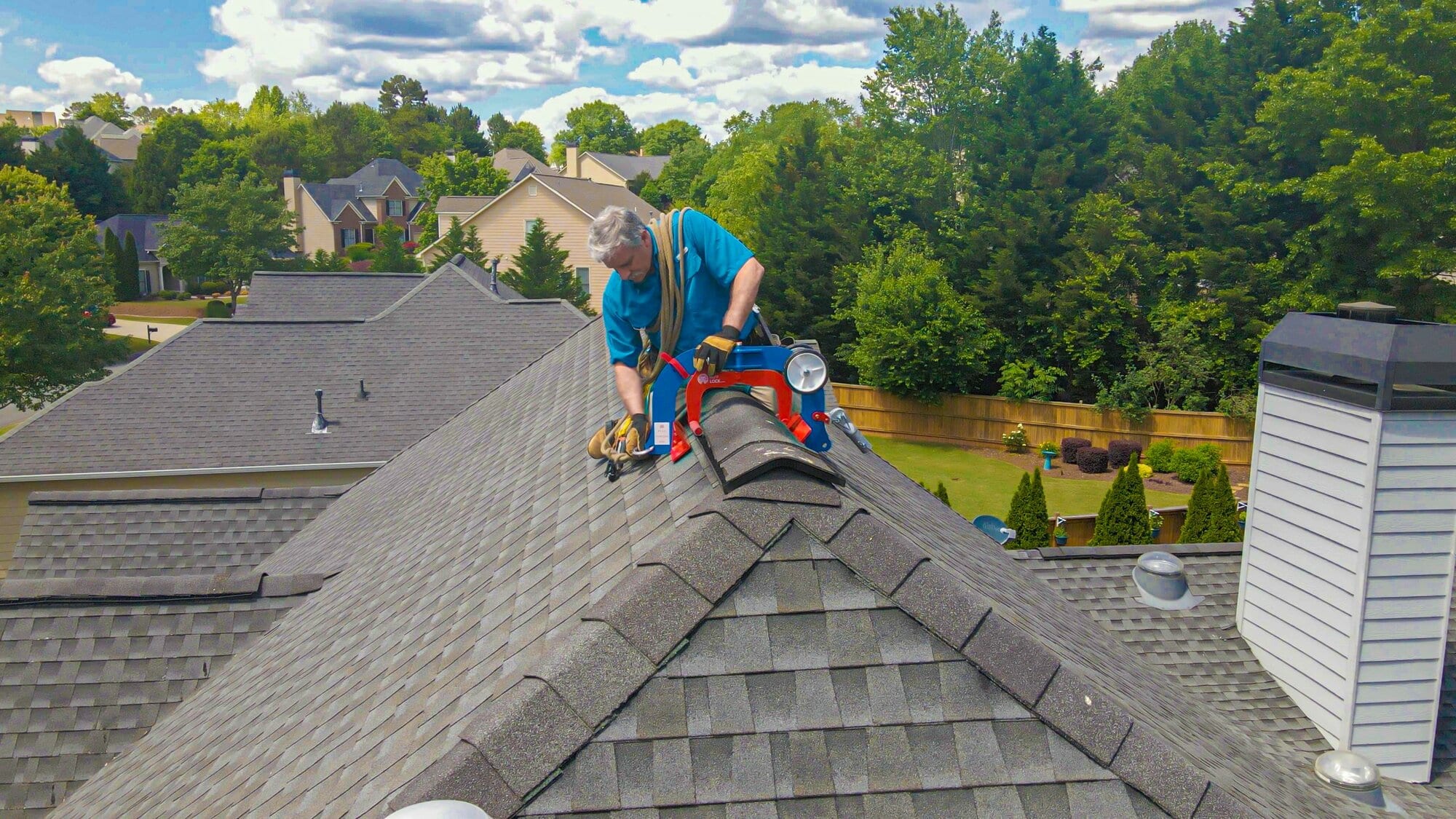
Roofing safety gear and equipment is the foundation of any successful construction or maintenance operation. From full-body harnesses and shock-absorbing lanyards to hard hats and protective eyewear, having the right roofer safety equipment protects contractors from life-threatening falls and daily occupational hazards.
Working on sloped roofs and elevated surfaces carries significant risks. According to the Bureau of Labor Statistics (BLS), falls remain the leading cause of death in the construction industry. Fortunately, the vast majority of these tragic workplace accidents are entirely preventable through the proper implementation of roof safety equipment and strict adherence to safety protocols.
This guide is designed to equip you with essential knowledge about the specific personal protective equipment (PPE) required for roofing and how to properly utilize it to ensure an OSHA-compliant work environment.
(Note: A Professional Residential Roof Inspection helps catch weak spots or hidden structural damage before they turn into major hazards).
Why Roofer Safety Equipment Actually Matters
When working on a steep-pitch surface 20 or more feet in the air, the risk is extreme; a single misstep can be fatal. This is precisely why having commercial-grade fall protection equipment for roofers is a critical necessity, not just a recommendation. Utilizing the appropriate roofing safety equipment mitigates the inherent dangers of working at heights, physically securing the well-being and existence of the worker.
Getting Up Safely: Your Roofing Ladder
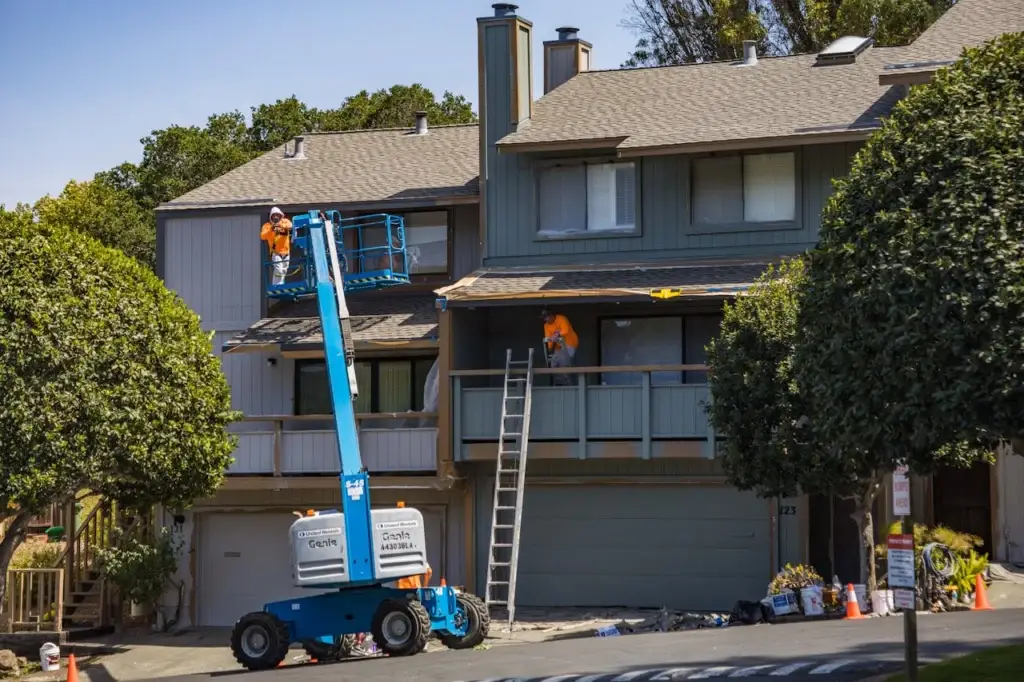
Before executing a steep roof repair or siding replacement, safe access is your first priority. Proper roof inspection safety equipment starts before you even leave the ground.
-
Inspect the ladder thoroughly for any structural cracks or damaged rungs before climbing.
-
Maintain three points of contact while ascending or descending (two hands and one foot, or two feet and one hand).
-
Face the ladder as you move up or down; never climb backwards.
-
Avoid the top two rungs to maintain your center of gravity.
-
Set on stable ground: Always ensure the base is set on firm, flat terrain before beginning your ascent.
Roof Anchors
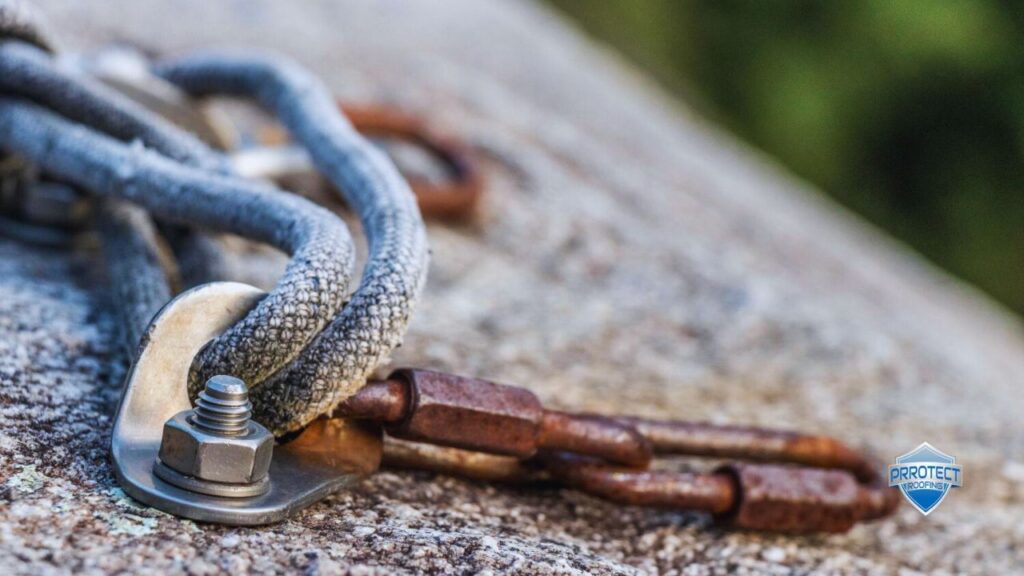
Roof anchors serve as the secure tie-off points where your lifeline connects to the roof’s structural framing. They come in two main configurations:
-
Permanent anchors: Left attached to the roof structure for future maintenance.
-
Temporary anchors: Reusable devices moved from job to job.
Make sure your anchor is compatible with your harness and installed into solid structural wood (like trusses or rafters), not just the decking. The National Institute for Occupational Safety and Health (NIOSH) provides strict guidelines on proper anchor load capacities for optimal roof safety.
Personal Fall Arrest System
Your Personal Fall Arrest System includes four key parts. You need an anchor point, a full-body harness, a shock-absorbing lanyard and a deceleration device.
Position the anchor directly above your work area. This minimizes how far you’d fall if something goes wrong.
The shock absorber is crucial. It reduces the impact force on your body during a fall. This complete system is your best defense against serious injuries when working at heights.
Roofing Boots
Slip-resistant soles are non-negotiable on steep roofs. Good roofing boots have slip-resistant soles that grip wet surfaces.
They have reinforced toes that protect you from falling objects. Ankle support keeps you stable on uneven surfaces. Waterproofing lets you work in any weather.
Brands like Red Wing, Timberland, and Danner make boots specifically designed for roof safety work. Your boots are your foundation up there. Invest in quality ones.
Roofing Gloves
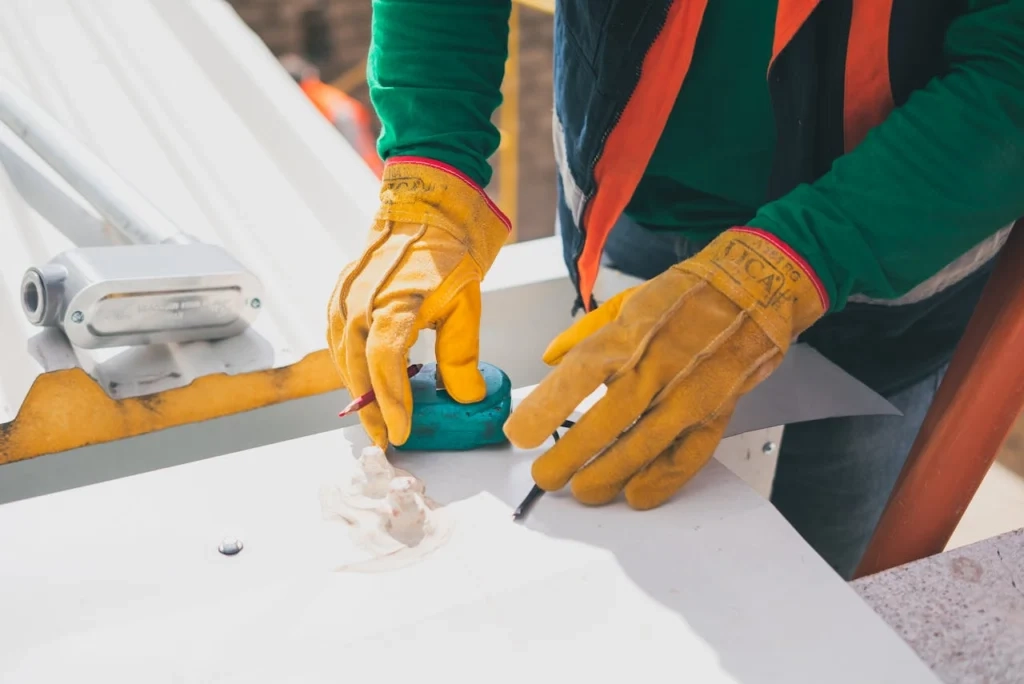
Quality gloves give you grip strength and protection. You need them when handling tools and materials. Look for gloves with reinforced palms and fingers. These areas wear out fastest. They should be made from weather-resistant materials. This way they work in rain or shine. You need strong grip for holding tools securely on steep roofs. Choose gloves made from leather or durable history synthetic fabric. They won’t fall apart after a few uses. Your hands control your tools. Protect them properly.
Edge Protectors
Most falls happen at roof edges. There’s nothing to stop you there. Edge protectors create barriers at these high-risk spots.
They keep you safe. Secure them tightly with screws or bolts. This prevents them from moving. Inspect them regularly for any damage.
Damage could make them less effective. Choose edge protectors made from weather-resistant materials. They can handle sun, rain, and temperature changes without breaking down.
Roofing Helmet
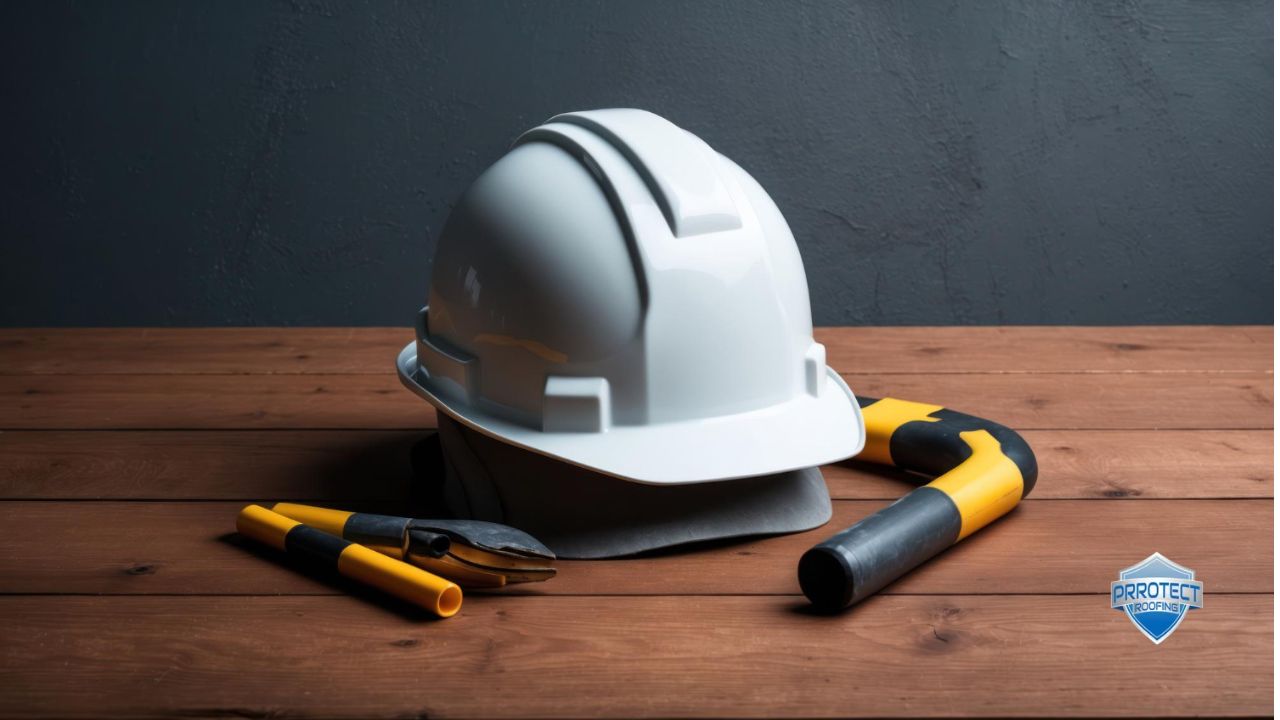
A helmet protects you from falling objects. It prevents head injuries that could cause you to lose balance and fall. Look for a helmet with proper fit.
Measure your head circumference to get the right size. Good ventilation prevents overheating during long workdays. This helps you stay focused and safe.
Make sure any helmet you buy meets current safety standards. A cheap helmet that doesn’t protect you is worse than useless.
Safety Goggles
Dust, debris, and particles fly around on every roof job. Goggles protect your vision from these hazards. Choose goggles with anti-fog coating.
This way you can always see clearly, even when you’re sweating. They should have a scratch-resistant surface that lasts longer.
Make sure they fit securely on your face. There should be no gaps where debris could get in. Check your goggles regularly. Replace them when they’re damaged or too scratched up to see through clearly.
Your Pre-Job Safety Checklist
Before starting work, make sure everything is ready. Your safety harness should be inspected and fitted properly. Check that your ladder is in good condition.
Look for cracks or loose parts. Verify that roof anchors are properly installed and secure. Have your complete Personal Fall Arrest System ready. Make sure it’s connected correctly.
Put on your slip-resistant boots. Make sure they’re laced tight. Pull on gloves with good grip. Fit your helmet correctly so it won’t slip. Put on safety goggles that are clear and secure. Taking five minutes to check everything could save your life.
Frequently Asked Questions About Roofer Safety Equipment
What safety equipment do roofers use?
Roofers primarily use a Personal Fall Arrest System (PFAS), which includes a full-body harness, an anchor point, and a shock-absorbing lanyard, to prevent falls and injuries.
What is a Personal Fall Arrest System for roofing?
A PFAS is essential roofing safety equipment that stops a fall. It consists of four main parts: an anchor point, a full-body harness, a shock-absorbing lanyard, and a deceleration device.
What are OSHA’s requirements for roof safety?
OSHA requires employers (under 29 CFR 1926.501) to provide fall protection for workers at heights above six feet. Roofers must use safety measures like guardrails, safety nets, or a PFAS.
How do you use a safety harness for roofing?
After inspecting the harness, put it on so the D-ring is between your shoulder blades. Adjust the chest and thigh straps to be snug but not restrictive.
What are the most common roofing safety hazards?
The most significant hazard is falls (from edges or ladders). Other common risks include falling materials, electrical exposure (near power lines), wet surface slips, and heat stress.
Stay Safe, Go Home Safe
Data from the Bureau of Labor Statistics proves that the hazards of working at heights are real. However, with consistent use of modern roofing safety gear and equipment, worksite fatalities are highly preventable.
Investing in commercial-grade roof safety gear is a minimal expense compared to the devastating physical and financial costs of an accident. Whether you are conducting a routine inspection, applying a liquid roof coating, or executing a full tear-off, properly utilize your safety equipment for roofers every single time you leave the ground. Inspect your gear daily and immediately discard any components that have arrested a fall.
Your family expects you home safely at the end of the shift. Make it happen by taking PPE seriously.
Need a qualified expert to evaluate your roof’s integrity safely? Contact us today to schedule your Professional Residential Roof Inspection with Prrotect Roofing and protect your home before minor leaks become major structural failures.