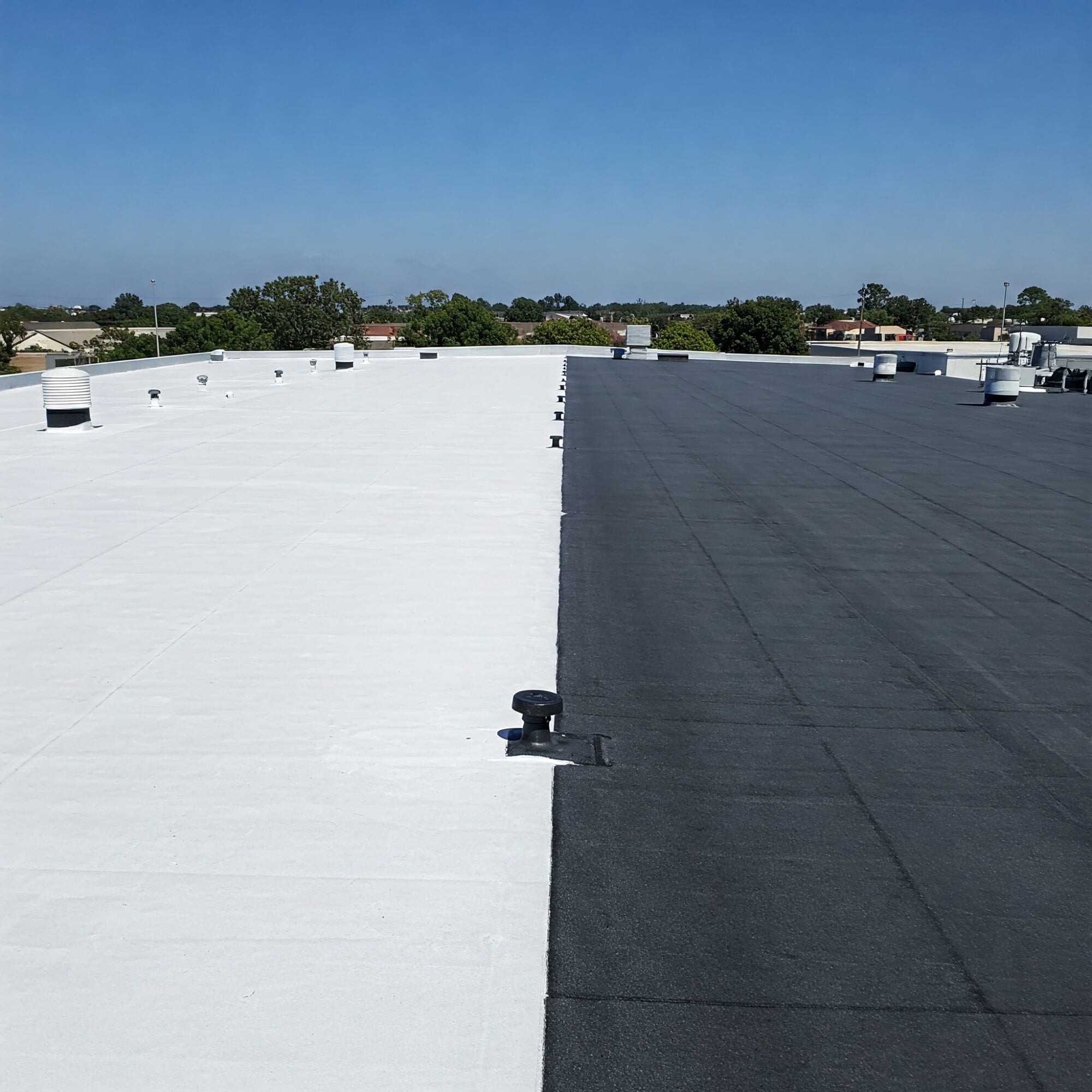
For commercial property owners, selecting the best flat roofing material is a critical decision that impacts long-term durability, energy efficiency, and overall cost-effectiveness. When looking at TPO vs EPDM commercial roofing, property owners must weigh these factors carefully to make the right investment.
While both of these single-ply membrane materials are engineered to provide top-tier protection against the elements, they have distinct advantages and drawbacks. This guide examines key entities such as material cost, membrane longevity, weather resistance, and contractor installation requirements to help you determine the best choice for your business infrastructure.
“When business owners ask me to compare TPO versus EPDM, I always tell them there is no one-size-fits-all answer. EPDM is a proven, budget-friendly workhorse, especially when dealing with cold Missouri winters. But if you want maximum energy efficiency and a seamless, puncture-resistant barrier against leaks, TPO is incredibly hard to beat. The right choice ultimately comes down to your building’s specific roof traffic, your local climate, and your long-term financial goals.”
Choosing the Right Flat Roofing Material: TPO and EPDM Overview
Before diving into the comparison, it’s essential to understand the structural composition that makes TPO and EPDM the industry standards in commercial flat roofing.
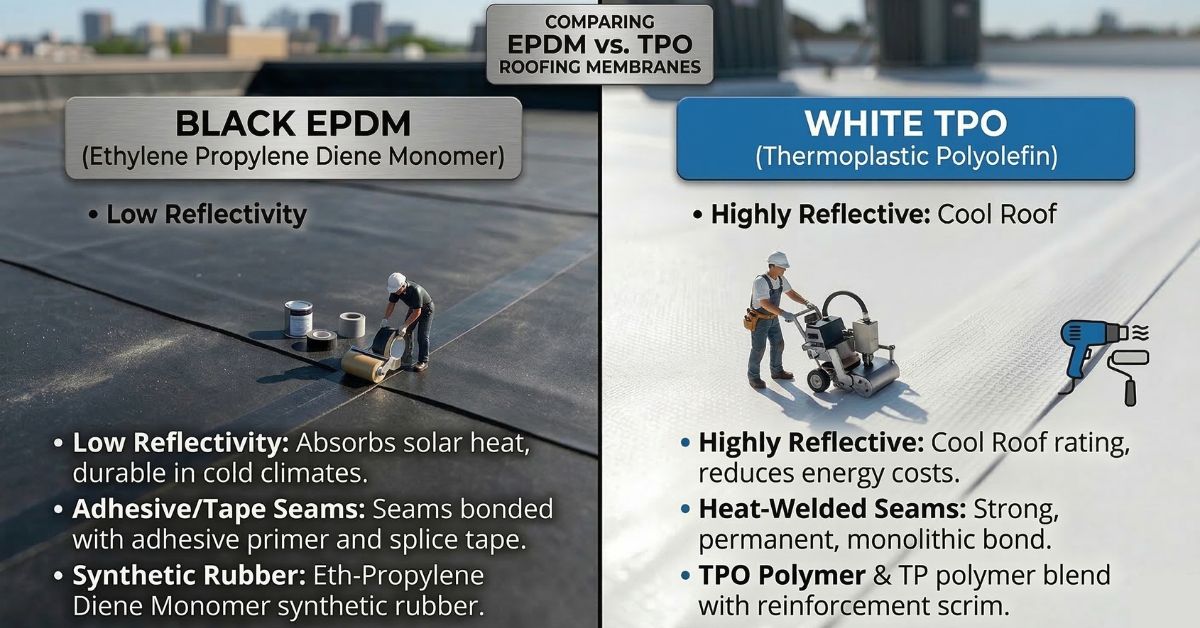
- TPO Roofing (Thermoplastic Polyolefin) is a single-ply roofing membrane composed of a blend of synthetic rubber, polypropylene, and reinforcing fiberglass fillers. It is highly reflective, resistant to chemical exposure and punctures, and utilizes heat-welded seams that create a monolithic, watertight seal.
- EPDM Roofing (Ethylene Propylene Diene Monomer) is a synthetic rubber membrane known for its exceptional elasticity and longevity. It is typically installed in large, continuous sheets with seams that are adhered using industrial liquid adhesives or specialized seam tape.
While both roofing systems serve the same fundamental purpose, the difference between TPO and EPDM lies primarily in their chemical makeup, seam integrity, and thermal reflectivity.
Affordable Flat Roofing Solutions for Commercial Properties
If you are specifically looking for affordable flat roofing solutions for commercial properties, the initial material choice is critical. EPDM is widely considered the more budget-friendly option upfront because the synthetic rubber membrane is cheaper to manufacture and faster to roll out. However, affordability shouldn’t just be measured by day-one capital expenditure; factoring in lifecycle costs, HVAC energy loads, and maintenance is key to true commercial cost-effectiveness.
Cost Comparison: Upfront Investment vs Long-Term Value
When evaluating commercial flat roofing replacement options, comparing the EPDM vs. TPO cost requires looking at both material pricing and specialized labor.
Estimated Cost Breakdown (Per Square Foot)
| Cost Factor | TPO Roofing (Thermoplastic) | EPDM Roofing (Synthetic Rubber) |
| Average Material Cost | $2.00 – $3.50 | $1.50 – $2.50 |
| Average Labor Cost | $3.50 – $6.00 (Requires specialized welders) | $2.50 – $5.50 (Simpler adhesive application) |
| Total Estimated Upfront Cost | $5.50 – $9.50 per sq. ft. | $4.00 – $8.00 per sq. ft. |
| Long-Term Financial Impact | Reduces summer cooling costs significantly | May increase cooling costs unless coated white |
Which is better? If you’re prioritizing initial capital preservation, EPDM is the better choice. If long-term operational savings on energy bills and greater seam durability are your focus, TPO is the smarter investment.
Durability and Lifespan: EPDM vs TPO Roofing
Commercial roofs endure constant exposure to UV radiation, extreme temperatures, and heavy precipitation. The durability of TPO vs. EPDM roofing varies based on how their specific compounds react to these environmental stressors.
Maintenance and Repair Comparison
| Feature | TPO Membrane | EPDM Membrane |
| Expected Lifespan | 20–30 Years | 25–40 Years |
| Puncture Resistance | High (Reinforced scrim layer protects against debris) | Moderate (Thicker mils available, but inherently softer) |
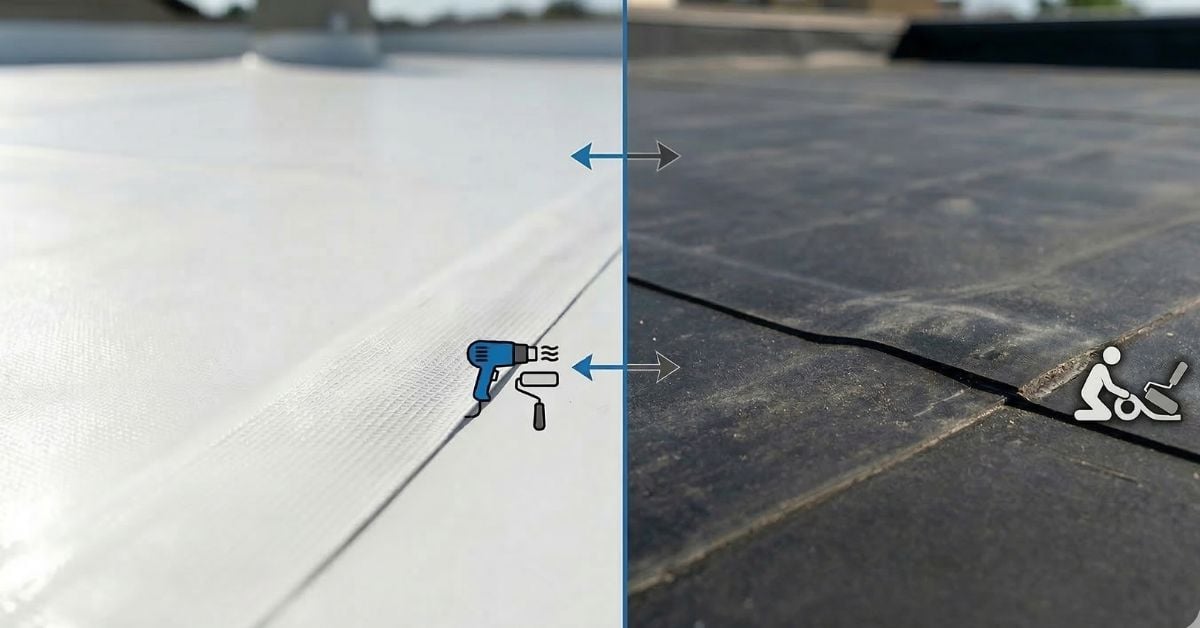
| Seam Vulnerability | Low (Heat-welding fuses the plastic together) | Moderate (Adhesives can degrade and separate over decades) |
| Repair Difficulty | Harder as it ages (Requires cleaning and a hot-air welder) | Easier (Can often be patched with specialized peel-and-stick tapes) |
Which is better? If raw longevity and elasticity are your primary concerns, EPDM is the better option. If you want a seamless, puncture-resistant surface that handles rooftop foot traffic well, TPO is the superior choice.
Weather Resistance and Performance in Different Climates
The best flat roofing material for a commercial building heavily depends on local weather conditions, particularly in areas with fluctuating seasons like Missouri.
- TPO excels in warmer climates due to its highly reflective surface. It minimizes solar heat gain, reducing indoor cooling costs in sun-drenched regions. However, in extremely cold environments, TPO can become stiff, potentially leading to surface stress.
- EPDM is ideal for cold and fluctuating climates. It remains remarkably flexible in freezing temperatures, heavily reducing the risk of stress fractures and ice damage. However, because it is a dark-colored material, EPDM absorbs more heat, making it less efficient in hot regions unless an elastomeric reflective coating is applied.
(Note: If you are upgrading your building’s exterior to handle local weather, you might also consider reading about how James Hardie Siding is a premium choice for Missouri weather).
Energy Efficiency: Which Roof Helps You Save on Utility Bills?
Energy efficiency is a massive entity in the commercial real estate space, as roofing materials directly impact HVAC system loads.
- TPO roofing is an industry leader in energy efficiency. Its naturally white surface reflects UV rays, keeping buildings cooler and drastically reducing strain on air conditioning systems. Many TPO membranes meet Energy Star® and LEED certification requirements for green building sustainability.
- EPDM roofing, by default, is less energy-efficient in the summer due to its dark surface, which creates a “heat island” effect. However, white EPDM membranes or aftermarket acrylic coatings can be applied to improve reflectivity, bridging the energy efficiency gap.
Installation Process: Which Is Easier to Work With?
The installation methodology of TPO vs EPDM roofing directly impacts contractor labor costs and project timelines.
- TPO installation requires a contractor equipped with specialized robotic hot-air welders to fuse the overlapping seams. This creates a strong, watertight bond that effectively makes the roof one continuous piece of plastic, but it requires highly trained technicians.
- EPDM installation is generally faster and less reliant on heavy machinery. The synthetic rubber sheets are rolled out and adhered using bonding adhesives or seam tape. Fewer specialized tools make EPDM a more contractor-friendly option.
Final Summary Table: TPO vs. EPDM Pros and Cons
| Feature | TPO Roofing | EPDM Roofing |
| Cost | Higher upfront, high long-term ROI | More affordable upfront, higher energy costs |
| Lifespan | 20-30 years | 25-40 years |
| Durability | Puncture-resistant, fused seams | Highly flexible, less resistant to punctures |
| Ideal Climate | Best for hot, sunny climates | Best for cold, freezing climates |
| Energy Efficiency | Highly reflective (Reduces HVAC load) | Absorbs heat (Unless specially coated) |
| Installation | Requires specialized welding labor | Easier, less labor-intensive adhesive process |
Frequently Asked Questions
Which Is More Expensive, TPO Or EPDM?
Generally, TPO is more expensive upfront than EPDM. TPO requires specialized heat-welding equipment and skilled labor, pushing the initial installation cost higher. However, TPO can be more cost-effective over its lifecycle due to its energy-saving reflective properties, whereas EPDM is cheaper to install but may result in higher cooling costs over time.
What Is The Main Difference Between TPO And EPDM?
The main difference lies in their material composition and how their seams are secured. TPO is a thermoplastic, highly reflective white membrane with heat-welded seams that create a nearly impenetrable bond. EPDM is a flexible, dark synthetic rubber membrane with seams that are glued or taped together.
Which Roof Is Easier To Repair, TPO Or EPDM?
EPDM is generally easier and less expensive to repair. Small punctures or tears in an EPDM roof can often be fixed quickly using specialized peel-and-stick patches or liquid adhesives. TPO, on the other hand, requires a contractor with a hot-air welder to patch the membrane, which can become more difficult as the plastic ages and accumulates dirt.
How Do Warranties Compare For TPO And EPDM Roofing?
Manufacturer warranties for both TPO and EPDM typically range from 15 to 30 years depending on the guidelines set by organizations like the National Roofing Contractors Association (NRCA). The length and quality of the warranty usually depend on the thickness of the membrane you choose (standard options include 45-mil, 60-mil, and 90-mil) and whether the installation is performed by a manufacturer-certified commercial roofing contractor.
EPDM vs TPO Roofing: Which Is Better for My Business?
Both TPO and EPDM roofing offer distinct advantages, and the best choice depends entirely on your commercial property’s unique geographic location, budget, and operational needs.
- Choose TPO if: You want an energy-efficient, highly durable, and seamless roofing solution, especially in warmer climates where lowering AC costs is a priority.
- Choose EPDM if: You need a cost-effective, highly flexible, and long-lasting roofing material, particularly in colder climates where freezing and thawing are common.
For a customized recommendation, consult a commercial roofing expert who can assess your building’s requirements and suggest the most suitable option. No matter which material you choose, investing in quality installation and routine maintenance just like staying on top of aluminum siding repair will ensure long-lasting performance and cost savings for your business.