A roof does more than protect a home from rain, wind, snow, and sunlight. Its design also determines how effectively water moves away from the structure. One of the most important design features affecting water movement is the roof’s slope, also known as its pitch. Understanding the connection between roof slope drainage and roofing materials can help homeowners make better decisions when repairing, replacing, or maintaining their roofs.
For homeowners in Cottleville, Missouri, effective drainage is especially important because roofs must handle seasonal rain, storms, snow, ice, and changing temperatures. The right combination of roof slope, drainage, and materials can contribute to a more reliable roofing system. At Prrotect Roofing, we help homeowners understand how these components work together.
What Is Roof Slope?
Roof slope refers to how steeply a roof rises compared with its horizontal distance. It is commonly expressed as a ratio, such as 4:12, meaning the roof rises four inches for every 12 inches of horizontal distance.
Different homes have different roof slopes depending on architectural design, age, construction methods, and regional considerations.
The slope affects how quickly water moves across the roof surface. Steeper roofs generally encourage faster runoff, while low-slope roofs may require more careful drainage planning.
This makes roof slope drainage an important consideration when choosing roofing materials and designing drainage systems.
Why Roof Slope Matters for Drainage
Rainwater naturally follows gravity. On a sloped roof, water travels downward toward the edges, valleys, gutters, or other drainage points.
A properly designed roof slope drainage system helps move water away from the roof before it can collect in vulnerable areas. If drainage is inadequate, water may remain on the roof longer than intended.
Standing or slowly moving water can increase moisture exposure and contribute to deterioration, particularly when roofing materials are not designed for prolonged water contact.
Steeper Roofs and Water Runoff
Steeper roofs generally allow water to move away from the surface more quickly. This can be beneficial during heavy rainfall because water has less opportunity to remain on the roof.
However, a steep roof also requires properly designed gutters, flashing, valleys, and other drainage components to handle the volume and speed of runoff.
Good roof slope drainage therefore involves more than simply having a steep roof. Every part of the water-management system needs to work together.
Low-Slope Roofs Require Special Consideration
Low-slope roofs have less vertical rise and may move water more slowly. Because of this, drainage design becomes particularly important.
Low-slope roofing systems may use membranes or other materials specifically designed for their application. The roof may also rely on drains, scuppers, or carefully positioned slopes to direct water away.
Using materials that are not appropriate for the roof’s slope can create problems. Proper roof slope drainage should always be considered before selecting a roofing system.
How Roof Slope Influences Material Selection
Not every roofing material is suitable for every roof slope. Asphalt shingles, metal roofing, tile, slate, and membrane systems each have different installation requirements.
For example, some traditional shingle systems require a minimum slope to help ensure water drains properly beneath the roofing surface. Low-slope applications may require specialized systems designed to provide greater water resistance.
Choosing roofing materials based on appearance alone can lead to problems if the material is not appropriate for the roof’s design.
A professional evaluation of roof slope drainage can help homeowners understand which materials may be appropriate for their property.
Asphalt Shingles and Roof Slope
Asphalt shingles are widely used on residential homes, but they need to be installed according to the manufacturer’s requirements and applicable roofing practices.
The slope of the roof influences how water flows across the shingles. On an appropriately sloped roof, water can move toward the gutters efficiently.
For homeowners considering asphalt shingles, understanding roof slope drainage is important before selecting and installing the roofing system.
Metal Roofing and Roof Slope
Metal roofing can be used on many different roof designs, but the specific metal system and installation method need to match the roof’s slope.
Certain standing seam and metal panel systems may be suitable for lower slopes than traditional roofing materials, depending on the product and manufacturer requirements.
Proper flashing, seams, fasteners, and drainage details remain essential. A professional should evaluate roof slope drainage before recommending a particular metal roofing system.
Roof Valleys and Water Flow
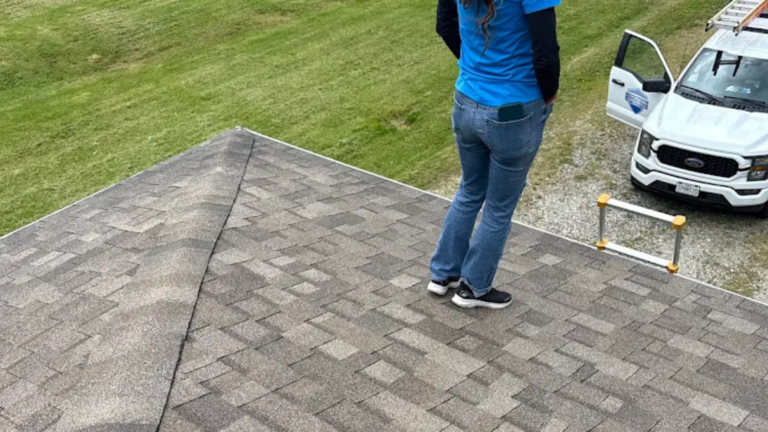
Roof valleys are areas where two roof slopes meet. They collect water from both sections of the roof, making them important parts of the drainage system.
If valleys are improperly designed, installed, or maintained, water may accumulate or enter beneath roofing materials.
Proper roof slope drainage requires careful attention to valleys, flashing, underlayment, and the direction of water flow.
Debris should also be removed from valleys when it can be done safely because leaves and other materials can interfere with normal drainage.
Gutters and Downspouts Matter Too
Even a properly sloped roof can experience drainage problems if the gutters and downspouts are undersized, blocked, damaged, or improperly positioned.
Roof slope affects how quickly water reaches the edges, while gutters need to collect and carry that water away from the home.
An effective roof slope drainage strategy considers the roof area, slope, gutter configuration, downspout placement, and local rainfall conditions.
Keeping gutters clear is one of the simplest maintenance steps homeowners can take to support proper drainage.
Signs of Poor Roof Slope Drainage
Homeowners should watch for warning signs that may indicate drainage problems.
These can include:
- Water pooling on the roof
- Repeated leaks
- Overflowing gutters
- Water stains near roof edges
- Damaged fascia
- Deteriorated roofing materials
- Moisture around roof valleys
- Ice or water buildup during winter
- Recurring problems in the same roof area
These symptoms can have several possible causes. A professional inspection can determine whether roof slope drainage is contributing to the problem.
Missouri Weather and Roof Drainage
Cottleville homeowners experience a variety of weather throughout the year. Heavy rain can quickly send large amounts of water across the roof, while winter weather introduces freezing and thawing conditions.
Proper roof slope drainage helps water move away from the roofing system efficiently and reduces the opportunity for moisture to remain in vulnerable areas.
After severe storms, homeowners should check for visible drainage issues and schedule a professional inspection if they notice leaks, damaged roofing materials, or recurring water accumulation.
How Homeowners Can Improve Roof Drainage
Homeowners can take several steps to support effective roof slope drainage. Keep gutters and downspouts clear of leaves and debris. Make sure downspouts direct water away from the foundation. Monitor valleys and roof edges for signs of water accumulation.
If water repeatedly pools in one area, do not simply cover the area with additional roofing material or sealant. The underlying drainage issue should be identified first.
Professional roof inspections can help determine whether the problem involves roof slope, damaged materials, blocked drainage, or another issue.
Why Professional Roofing Advice Matters
Roof slope affects more than appearance. It influences drainage, material selection, installation methods, flashing requirements, and long-term maintenance.
At Prrotect Roofing, we understand that every home has different roofing needs. Our team can help homeowners evaluate their roofing systems and understand how roof slope drainage affects their maintenance, repair, or replacement decisions.
Choosing materials that are appropriate for the roof’s slope can help homeowners avoid unnecessary problems and improve the overall performance of the roofing system.
Conclusion
Roof slope plays an important role in how water moves across a home’s roofing system. Steeper roofs generally encourage faster runoff, while low-slope roofs require careful drainage planning and materials designed for their application.
For homeowners in Cottleville, Missouri, understanding roof slope drainage can help when selecting roofing materials, planning repairs, and maintaining gutters and drainage systems. Properly designed valleys, flashing, gutters, and downspouts all contribute to effective water management.